Category: Shopping

Four Leaf Clover Bracelet as a Lucky Charm for Modern Jewelry Lovers

Engagement traditions have always been the reflection of cultural values, family roles and the changing social norms. They have continued adapting from Ancient Egypt’s braided reeds as rings to the present-day diamond solitaire. Not only is the engagement nowadays revolving around the ring, but also around personal expression, cultural heritage, and even items such as a 4 leaf clover bracelet which can stand for love and prosperity in a relationship. The change of these traditions is the evidence of how different societies manage to mix up new ideas with old ones.

Ancient Symbols and Meanings

The first artifacts of engagement rings that we have come across are Egyptian and form approximately 3000 BCE. The “circular bands” were a representation of eternity. Later on, the Romans popularized iron and gold rings among the people and it was a widespread practice to have their family crests carved on their rings. The use of diamonds for engagement rings is mentioned in historical accounts and one of the most prominent instances is when Archduke Maximilian of Austria gave a diamond ring to Mary of Burgundy in 1477. Though these customs were very much four leaf clover bracelet associated with money and social rank, they nevertheless bore spiritual significance, similar to the symbolism of charms like a four-leaf clover bracelet, which represents hope and faith.

Worldwide Differences in Customs

The traditions of engagement in every country are different. In India, for instance, the exchange of rings is often a part of an elaborate ritual that involves the families getting totally involved. On the other hand, the Japanese people have “yuino”, where gifting each other with things like folded paper fans and dried seafood are the presentations. In the case of Maasai people of Kenya, beadwork jewelry takes the central place in engagement with different colors representing various beyond life. Wearing of accessories such as a 4 leaf clover bracelet can be part of modern ceremonies, thereby mingling personal style with cultural symbolism.

Recent Changes and Customization

The diamond ring became the standard engagement ring of the 20th century worldwide, mainly because of the campaign promoting it as “diamonds are forever.” However, the current couples are the ones who are gradually changing the engagement customs. The lab-produced diamonds as well as the colored gemstones along with eco-friendly metals are the ones that are really trending, with studies indicating a 35% surge in the purchase of jewelry that is good for the environment in 2024. Consequently, the four leaf clover bracelet turns out to be, for some people, a contemporary symbol of fortune and togetherness, chosen for its meaning and personal connection instead of going by the usual practices.
Transform Your Digital Presence with the Leading Website Design Company in Bhubaneswar

In today’s fast-paced digital world, having a strong online presence is no longer optional—it’s essential. Whether you are a startup, small business, or an established enterprise, your website serves as the first impression for potential customers. Choosing the right Website Design Company in Bhubaneswar can make all the difference between a website that simply exists and one that truly engages, converts, and grows your business.

A professional website design is more than just aesthetics; it’s about creating a seamless user experience, responsive layouts, and intuitive navigation that aligns with your brand identity. The right design company in Bhubaneswar ensures your website is visually appealing, mobile-friendly, and optimized for search engines, helping you attract more organic traffic.

Why Choose a Professional Website Development Company in Bhubaneswar?

Partnering with a reputed Website Development Company in Bhubaneswar comes with several advantages. Firstly, they offer customized solutions tailored to your business needs. From e-commerce platforms to corporate websites, they leverage modern technologies and frameworks to create scalable, high-performance websites.

A skilled development team focuses on functionality, security, and speed—critical factors that directly affect user experience and SEO rankings. Moreover, professional companies provide ongoing support and maintenance, ensuring your website stays up-to-date with the latest trends and technological advancements.

Key Services Offered by Website Design and Development Companies

  1. Custom Website Design: Tailored designs that reflect your brand’s identity.
  2. Responsive Web Development: Websites optimized for desktops, tablets, and mobile devices.
  3. E-Commerce Solutions: Secure and user-friendly online stores to boost sales.
  4. SEO-Friendly Websites: Optimized coding and content structure to improve search engine rankings.
  5. Website Maintenance & Support: Continuous updates and technical assistance to ensure smooth performance.

Benefits of Hiring Local Experts in Bhubaneswar

Working with a local Website Design Company in Bhubaneswar has unique advantages. You can enjoy face-to-face consultations, faster project turnaround, and a better understanding of the local market. Local companies also understand the business culture in Odisha, enabling them to craft websites that resonate with the target audience.

By choosing a professional Website Development Company in Bhubaneswar, you are investing in more than just a website—you’re investing in a platform that can drive growth, enhance your brand image, and improve customer engagement. In a competitive digital landscape, your website is your most powerful marketing tool. To stand out, it is crucial to partner with an experienced Website Design Company in Bhubaneswar and a reliable Website Development Company in Bhubaneswar. From creative designs to robust functionality, the right company will ensure your website not only looks impressive but also performs exceptionally.

Portrait Photography Trends Among South African Youth

The art of portrait photography has been one of the most emotive means of expression for the South African youth, simultaneously portraying their cultural identity and their modern day artistic side. Young photographers through the rise of digital and social media platforms and the use of easy-to-access equipment are already the ones who create new visual narratives that combine tradition with modernity.

Embracing Technology and Style Shifts

Orms Connect and Robust Creative Solutions’ latest reports predict that 2025 will see a significant shift to retro and vintage looks as well as AI-assisted editing. The youth of South Africa are bringing to life the film-powered colors while at the same time having their portraits turned up through perfected editing processes for social media and contests. And in Johannesburg, there is more and more young creative people looking for studio photography JHB as they want to develop professional skills through practicing different lighting sets and group photopraphy.

Social Media and Identity Expression

The rise of social media platforms like Instagram and TikTok has been a factor in the increased popularity of portrait photography among the youth to the point that it is now recognized as the most important medium for youth identity. The Photographic Society of South Africa, through its studies, has found that most portrait submissions disclose personal traits, traditions, and fashion trends. In the meantime, the location of studios also impacts the thus people look for photoshoot studio near me to make content that has qualities of both personal and professional.

Competitions and Global Exposure

The National Youth Salons organized by the Photographic Society of South Africa have opened the door to the world, where the contestants competed with their equals in the whole world. Thus, the young portrait photographers have polished their works, very often by merging the African classic with the worldwide customs. As a result, there is a lively and constantly changing portrait culture that has made the South African youth to be the very ones in the photography world keeping the flow across borders.

What Makes Alcohol “Organic”? A Breakdown of Certification Standards

The organic-type alcohol is certified by very demanding standards that include the methods of production and the nature of the ingredients, besides the impact on the environment. Below is a detailed description of the characteristics that make alcohol really organic.

Getting to Know Organic Alcohol

Organic alcohol is a term derived from its source and treatment. It has to be composed exclusively of agricultural products, which are certified organic indicating no synthetic pesticides, herbicides, or GMOs have been used in their cultivation. Various organizations such as the USDA and EU Organic Certification establish the norms for organic, which cover the entire cycle of production from fermentation, distillation, and bottling. For instance, the grains for organic spirits are required to be grown on soil that has been free from any banned substances for a minimum of three years.

Certification Bodies and Global Standards

In different parts of the world, a number of organizations are taking care of certification of alcohol as organic. In the USA, the USDA’s National Organic Program (NOP) is the major one to look after. In Europe, the EU Organic Regulation is responsible for the whole process. For making herbal tinctures and food-grade solvents, organic 190 proof alcohol is very often the choice because of its purity and meeting the requirements of these standards.

Why Organic Certification Matters? Organic certification is more than just a title it is a pledge to health, transparency, and sustainability. The consumer market leans more and more towards organic alcohol because of its minimal chemical exposure and clean-label allure. This whole procedure ensures that organic alcohol becomes a reliable choice for sensitive applications such as in botanical processing and flavor extraction where the term best alcohol for culinary extractions is often used synonymously with organic-certified ethanol due to less contamination risks and compliance with food safety protocols.

Organic vs. Conventional Alcohol: Key Differences in Ingredients and Processing

The consumer’s thirst for natural and more eco-friendly ingredients has made it necessary to separate organic and non-organic alcohols more distinctly in many sectors, herbal medicine, cosmetics, and food processing to name a few. Similar functional uses exist for both types, yet the variances in obtaining, processing and purity may not only cause a difference in the product’s quality and safety but can also considerably impact the environmental footprint.

Understanding the Basics: What Sets Organic Alcohol Apart?

Organic alcohol is made from materials that are cultivated using methods that are totally free of synthetic chemical pesticides, herbicides, or genetically modified organisms (GMOs). The USDA National Organic Program certifies that organic alcohol has been produced with big agricultural and strict processing standards.

Processing Methods and Environmental Impact

Every single step in production of organic alcohol highlights the environmental aspect. The organic spirits distilleries are mainly using the renewable energy sources, closed water systems, and cleaning materials that get decomposed naturally. An example of this is the use of more water and dependence on fossil fuels which is of course in conventional brands. These variations are very important in the case of organic alcohol for tinctures, where the extraction of herbs requires utmost purity and minimum chemical interference.

Purity, Proof, and End Use

One of the major differences comes to the final purity and the use of alcohol. Organic ethanol is frequently distilled to very high purity which makes it fit for the use in consumption and non-consumable applications such as natural cosmetics and botanical extractions. As an illustration, 200 proof food grade alcohol comes in both organic and non-organic forms, however, the organic variant guarantees that there were no synthetic chemicals used during any part of the production process.

The Rise of Organic Alcohol in Global Nightlife and Mixology

By the use of organic alcohol, global nightlife is gradually turning to a better side, as both mixologists and consumers are starting to use cleaner, sustainable spirits. The trend is developing in different markets and among various generations.

A New Era of Conscious Consumption

The global nightlife scene is experiencing a silent revolution, which is primarily caused by the demands of the consumers for more transparency, sustainability, and wellness. As the younger generations are the main drivers of this transformation, the change has been particularly pronounced in their drinking choices. They are, for instance, more interested in and willing to pay for “clean” and ethically sourced ingredients. Gen Z, for one, is the front runner of the movement aiming at reducing alcohol consumption, choosing drinks with higher quality instead of those with more quantity, and demanding beverages that are in harmony with their principles.

Market Growth and Global Adoption

The organic alcoholic beverage market is expected to experience a steady and stable growth until 2035 mainly due to the increased acceptance in North America, Europe, and Asia Pacific. Market Research Future has pointed out that luxury drinkers, environmentalists, and health-conscious people are the main consumers driving the demand who put a priority on such certified products as USDA Organic and EU Organic spirits.

Mixology Meets Sustainability

Bartenders have been and are still incorporating the locally sourced herbs, botanicals, and artisanal ingredients into their creations where modern mixology is grasping the sustainability concept. One of the examples that prove this point is the use of food grade ethyl alcohol in craft spirits, tinctures, and the like, which not only ensures purity but also compliance with health standards without compromising the quality or flavor of the product.

Is Organic Alcohol Better for Your Body? What the Research Says

While all the same organic alcohol can lessen the chances of being subjected to harmful residues, it still does not eliminate the health risks that come with alcohol. Studies have proven that the organic varieties do not leave any residue of synthetic pesticides and additives but the main health influences of ethanol still remain.

Understanding Organic Alcohol

The grower cultivates the organic alcohol from the natural sources only and employs no chemical pesticides, herbicides, or GMOs at all. The chief raw materials for this ethanol making process are grains, grapes, and cane sugar. More and more consumers are aware of this term as they want safer products. The popularity is still rising as people become more and more knowledgeable about what they drink and eat every day.

What the Research Says about Health Impact?

The scientific agreement has now reversed the tide that it considered alcohol as a friend in moderation. One of the latest insights from Harvard Health is that although the older studies indicated that moderate drinking could lead to a decline in heart disease risk, the present day at their doorstep the notice has been issued based on the weak methodology of the previous studies. What is the query of people that what is food grade alcohol really means? This is the purified ethanol which is julienned for human consumption.

Additives, Purity, and Consumer Choice

The lack of synthetic additives, preservatives, and flavorings is one of the principal favorable reasons for the organic alcohol. This case is particularly applicable to liquors made in mass production, non-organic varieties may have caramel coloring, sulfites or other chemical agents as a matter of their production process. For example, organic cane alcohol is often present in making herbal tinctures and cosmetics due to its purity and clean extraction technique.

How 3D Rendering Helps Project Managers Cut Errors and Save Money

Project managers in construction and design industries struggle with accuracy, efficiency and cost control daily. Traditional blueprints create confusion that leads to expensive mistakes and project delays. Advanced visualisation techniques help managers reduce risks and improve team communication. Resource allocation becomes more efficient when teams use these modern tools. Project management services Paarl work better with 3D rendering technology integrated into workflows.

Making Planning and Design More Accurate

Construction planning errors cause massive financial losses when teams discover them during building phases. RealRender3D data shows minor drawing mistakes or wrong material estimates trigger expensive delays. Project budgets increase while safety concerns compromise on-site efficiency levels. 3D rendering prevents these problems by letting managers examine designs before construction starts. Potential flaws and structural conflicts become visible long before breaking ground. Complex blueprints transform into clear, photorealistic models everyone can understand. Architects, engineers, contractors and investors share the same visual understanding. Project scope becomes clearer when stakeholders see realistic representations. Rapid development regions need this precision for infrastructure growth. 3D rendering South Africa supports expanding projects where team alignment matters most.

Saving Money Through Better Visualisation

Project management prioritises financial efficiency above many other concerns. 3D rendering helps achieve cost goals through complete building process visualisation. Quickviz reports show managers allocate resources better when they see everything beforehand. Structural conflicts get identified early, preventing expensive on-site modifications later. Research data indicates 3D visualisation reduces budget overruns by up to 25%. Traditional methods cannot match these financial savings consistently. Small developments benefit as much as large infrastructure projects. The investment in 3D rendering pays for itself through prevented mistakes.

Building Trust and Better Communication

3D rendering improves more than just technical accuracy and cost savings. Visual models enhance stakeholder communication according to Birkes Builders research. Clear, shared references help teams collaborate more effectively. Clients feel confident when they see realistic previews of finished projects. Contractors receive precise instructions that eliminate confusion and guesswork. Better communication reduces disputes between different project participants. Decision-making speeds up when everyone understands the visual plan. Project managers build trust by presenting detailed visualisations to stakeholders. Long-term industry success comes from this improved credibility and reliability.

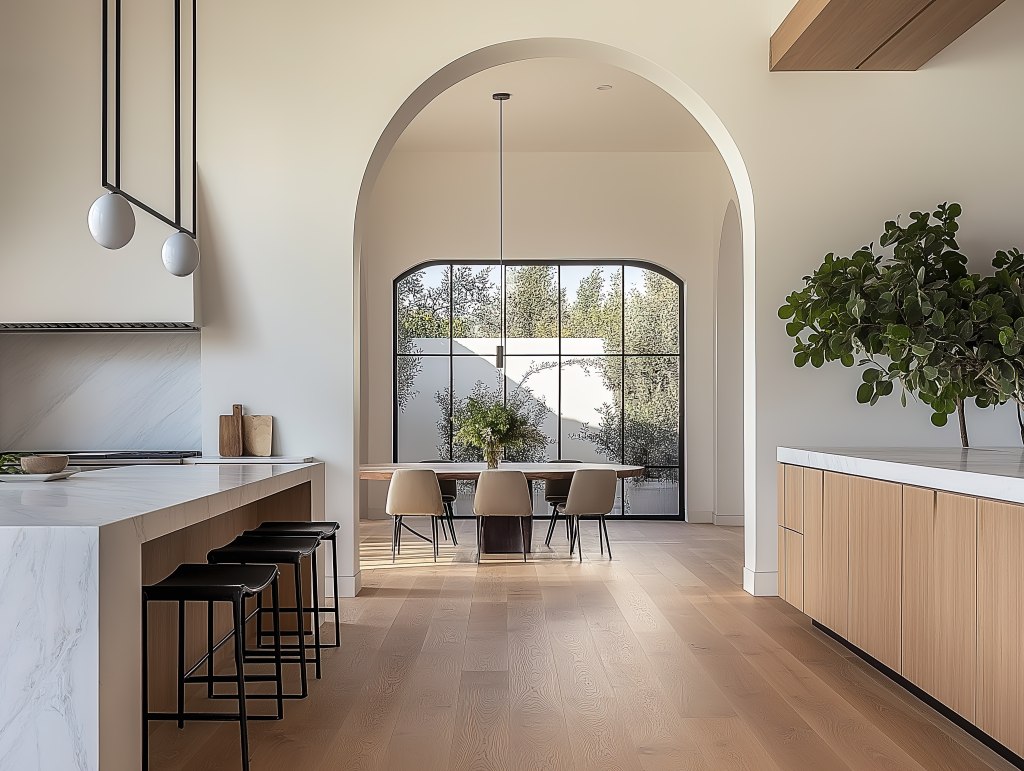
https://s.mj.run/VLUDWtcXvL0 A modern kitchen with wood floors, white walls, and an arched doorway leading to the dining room in a luxury modern farmhouse-style home. A large archway leads into the open plan of the kitchen with, arched coffee corner, and kitchen island with calacatta quartzite. The color palette is neutral with greenery, and the space is filled with natural light from the windows. The decor is modern, with clean lines and soft lighting, in the style of Takeshi Murata –chaos 10 –ar 4:3 –style raw –profile 26jmb7w –stylize 500 –v 6.1 Job ID: 805a423a-3c2b-4e3e-9e1f-286de2527cea

How 3D Rendering Transforms Interior Design Projects Today?

Interior design has changed completely since 3D rendering replaced old sketches with realistic images. Clients see exact room designs before builders start working on the actual space. This technology cuts mistakes by showing every detail clearly. Projects finish faster while spending less money on corrections.

Better Visual Details and Precise Results

3D rendering creates detailed room previews that help everyone understand the final design perfectly. 3D Rendering World research shows these digital models cut designer-client misunderstandings by 70%. People see actual materials, colours, and room layouts before construction starts. This accuracy prevents expensive mistakes during building phases. An interior designer Paarl shows clients different design choices through rendered images. Clients pick their preferred option without guessing how rooms will look.

Faster Project Management Systems

Rendering technology speeds up design work because designers change project elements instantly without delays. Inspiredesign confirms that current software lets professionals modify layouts, materials, and finishes immediately when ideas shift. Manual revisions that took hours now happen in seconds. Real-time flexibility matters most for large complex projects needing frequent updates. Client requirements change while structural needs evolve during planning phases. Teams test multiple decisions quickly since rendering keeps productivity levels high throughout.

Increasing Client Interest and Industry Expansion

Designers use 3D rendering South Africa to explain complex ideas that clients cannot understand from flat drawings. Homeowners, investors, and project stakeholders see photorealistic images instead of confusing blueprints. These visual presentations help everyone grasp design concepts, room arrangements, and material selections instantly. Research shows 3D visualizations increase project approval rates by 40% during first meetings. Traditional 2D drawings cannot match this success rate in client presentations. The global 3D rendering market will exceed USD 9 billion by 2030 according to industry forecasts. Design firms worldwide adopt this technology to win more contracts and satisfy clients better.

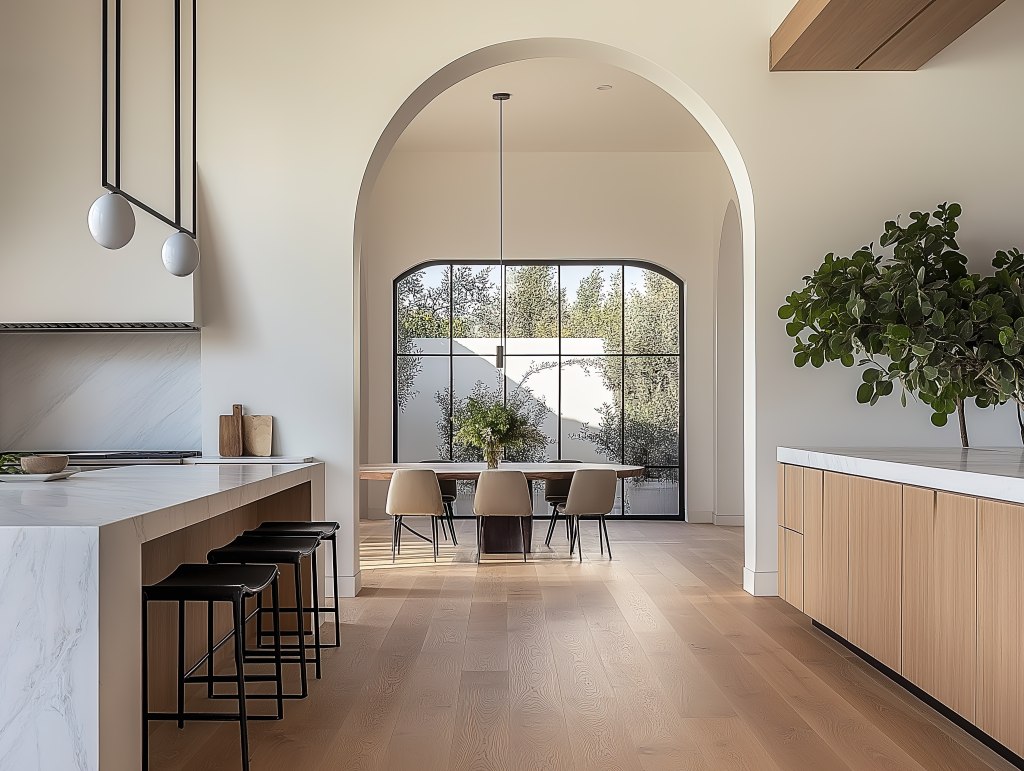
https://s.mj.run/VLUDWtcXvL0 A modern kitchen with wood floors, white walls, and an arched doorway leading to the dining room in a luxury modern farmhouse-style home. A large archway leads into the open plan of the kitchen with, arched coffee corner, and kitchen island with calacatta quartzite. The color palette is neutral with greenery, and the space is filled with natural light from the windows. The decor is modern, with clean lines and soft lighting, in the style of Takeshi Murata –chaos 10 –ar 4:3 –style raw –profile 26jmb7w –stylize 500 –v 6.1 Job ID: 805a423a-3c2b-4e3e-9e1f-286de2527cea

Technology Reshapes Home Makeovers Through Virtual Interior Design

Home makeover approaches transformed completely with virtual interior design emergence. Sketches and blueprints no longer limit homeowners who want space visualisation. Digital tools enable real-time viewing of entire room designs now. Industry reports show the global interior design software market exceeded $4 billion in 2023. Steady growth projections reflect demand for immersive visualisation and cost-efficient planning solutions. Creativity gets redefined while design becomes accessible to households everywhere. Technology democratises professional design services across different economic backgrounds.

Digital Visualisation Tools Gain Momentum

Modern design practices centre around virtual reality (VR) and augmented reality (AR) platforms. Virtual tours let homeowners explore redesigned spaces before renovation commitments begin. Costly errors decrease when people see changes before construction starts. Autodesk studies reveal VR-based design reduces project revisions by nearly 30%. Time and money savings follow this technological implementation naturally. Interior design South Africa clients explore layouts matching local styles and global standards. Lighting experiments, furniture placement tests and colour palette trials exceed traditional sketch capabilities.

AI and Smart Technology Enter Home Styling

Virtual interior design increasingly incorporates artificial intelligence for better results. User preferences guide AI-powered platforms to generate tailored design suggestions automatically. Personalisation improves the entire design process for homeowners and professionals. 2025 reports indicate nearly 40% of design firms use AI-driven tools now. Workflow streamlining and client satisfaction enhancement result from this adoption. Smart decor applications connect with home automation systems seamlessly. Homeowners preview smart lighting and thermostat functions within redesigned spaces beforehand. Virtual interior design services expand rapidly across global markets. Remote collaboration with professionals becomes possible without geographical limitations. Curated design solutions reach clients anywhere through digital platforms.

Market Growth Spreads Globally

Virtual interior design has a global appeal which extends past single regions or countries and is in fact a world wide phenomenon. In India we see real estate developers using immersive VR tours of fully furnished apartments which they are putting forward to prospective buyers which in turn allows them to see laid out designs, finishes and decor before anything is put in. Also at home in the US we are to see an increase in the use of very advanced online platforms which home owners are using to try out thousands of furniture and decor combinations which in turn they use to play with color schemes, try out space saving layouts and make purchase decisions via the computer. This trend we see as a global movement towards a design which is speedier, more interactive and totally device based.

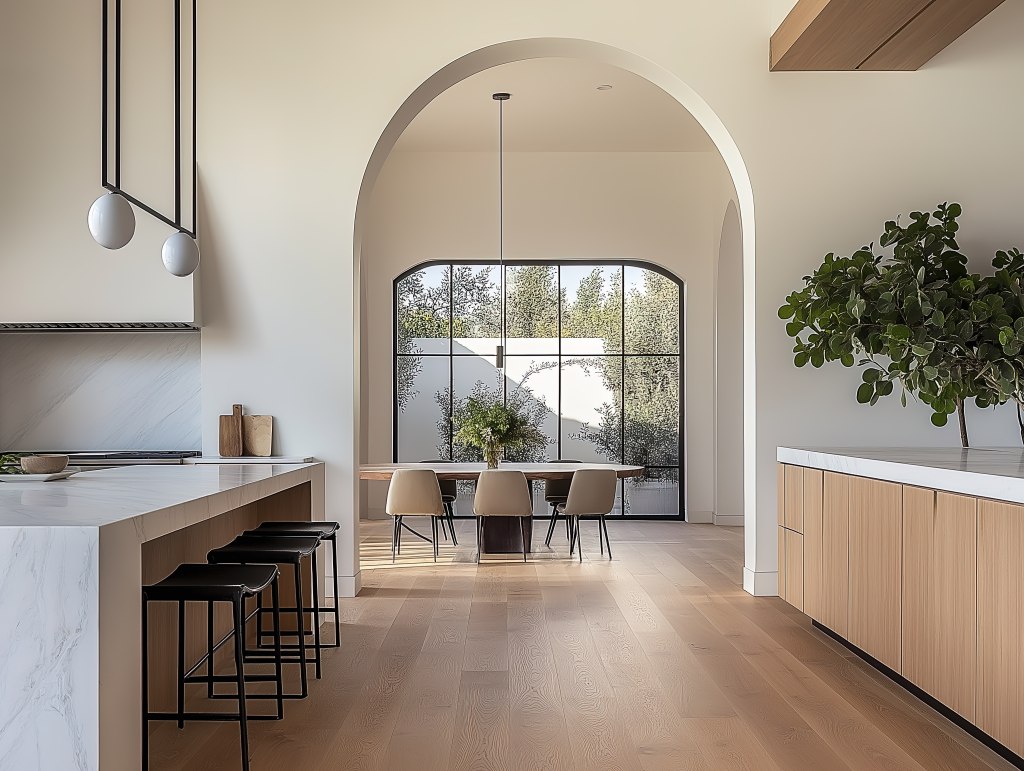
https://s.mj.run/VLUDWtcXvL0 A modern kitchen with wood floors, white walls, and an arched doorway leading to the dining room in a luxury modern farmhouse-style home. A large archway leads into the open plan of the kitchen with, arched coffee corner, and kitchen island with calacatta quartzite. The color palette is neutral with greenery, and the space is filled with natural light from the windows. The decor is modern, with clean lines and soft lighting, in the style of Takeshi Murata –chaos 10 –ar 4:3 –style raw –profile 26jmb7w –stylize 500 –v 6.1 Job ID: 805a423a-3c2b-4e3e-9e1f-286de2527cea